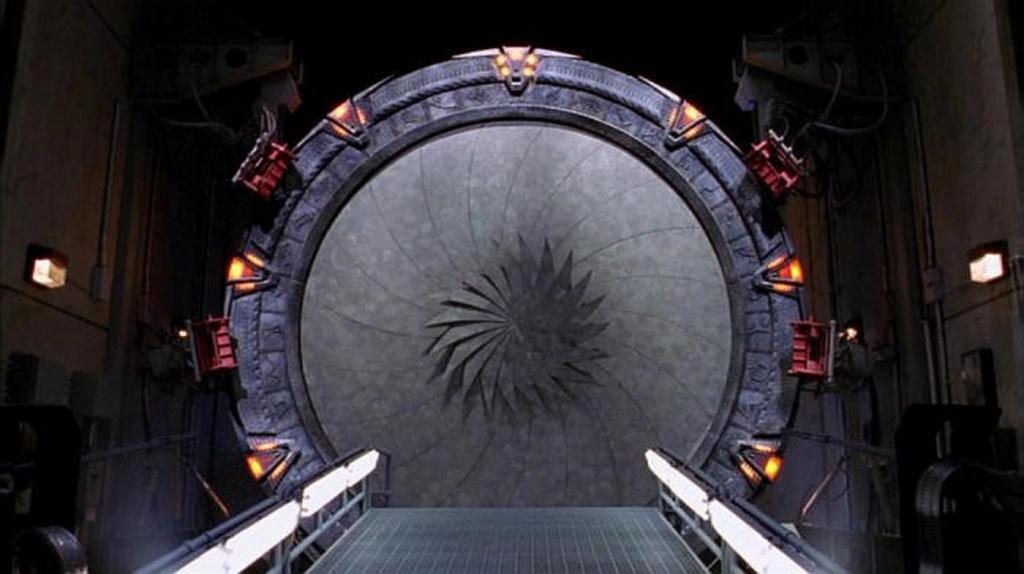
When Stargate SG-1 premiered in 1997, few could have predicted that it would become one of the longest-running and most beloved science fiction television series ever produced. Spinning off from the 1994 film Stargate, the series had a daunting challenge ahead of it. It needed to convince fans of the movie that a television adaptation was worthwhile while also attracting entirely new viewers.
Nearly three decades later, we know the outcome. Stargate SG-1 would go on to run for ten seasons, spawn multiple spin-offs, and establish one of science fiction’s richest fictional universes.
But how does the first season hold up today?
The answer is surprisingly well, though not without some growing pains.
Returning Through the Gate
The pilot episode, “Children of the Gods,” immediately establishes the premise. The Stargate, humanity’s portal to distant worlds, is reactivated after an attack by the alien Goa’uld. Retired Colonel Jack O’Neill is brought back into service, and a new team is assembled to investigate the threat.
The core cast comes together quickly:
- Colonel Jack O’Neill serves as the team’s military leader.
- Dr. Daniel Jackson returns from the film as the resident archaeologist and linguist.
- Captain Samantha Carter provides scientific expertise.
- Teal’c, a former servant of the Goa’uld, defects to Earth and joins SG-1.
This lineup would ultimately become one of science fiction television’s greatest ensembles.
What makes the team work so well is how distinct each member feels from the beginning. O’Neill provides dry humor and practical leadership. Daniel brings curiosity and idealism. Carter combines intelligence with competence. Teal’c offers an outsider’s perspective while carrying the weight of his people’s oppression.
Daniel Jackson receives some of the season’s strongest material in episodes like “Cold Lazarus,” which explores O’Neill’s grief over his son while highlighting Daniel’s empathy, and “Torment of Tantalus,” where his passion for discovery drives one of the series’ most memorable adventures. Likewise, Teal’c’s struggle to reconcile his past with his new allegiance is given emotional weight in “Bloodlines,” which reveals the personal cost of his rebellion against the Goa’uld.
Even in the first season, the chemistry is already evident.
The Strength of Exploration
One of the greatest strengths of Season One is its sense of exploration.
Modern science fiction often focuses on galaxy-spanning wars or existential threats. Stargate SG-1 begins with something much simpler: a team traveling through a mysterious portal to see what lies beyond.
Each episode introduces a new world, culture, or challenge.
Some planets are peaceful. Others are hostile. Some contain advanced technology while others resemble ancient civilizations frozen in time.
This episodic structure gives the season a feeling of adventure that remains charming today. Every activation of the Stargate feels like opening a door into the unknown.
Episodes like “The Nox” demonstrate the show’s ability to challenge both its characters and the audience’s assumptions. What initially appears to be a primitive society is revealed to possess technology and wisdom far beyond humanity’s understanding. Meanwhile, “Thor’s Hammer” expands the mythology by introducing the Asgard and hinting at a much larger galaxy beyond the Goa’uld threat. These episodes showcase the sense of wonder that would become one of SG-1‘s defining strengths.
While later seasons would build a complex mythology around the Goa’uld, the Ancients, and interstellar politics, Season One thrives on discovery.
The Goa’uld Make Effective Villains
Science fiction lives and dies by the quality of its antagonists, and the Goa’uld quickly establish themselves as a compelling threat.
Posing as gods throughout human history, the Goa’uld combine advanced technology with authoritarian rule. Their power is immense, but what makes them particularly interesting is their arrogance.
Unlike many science fiction villains who seek destruction for its own sake, the Goa’uld seek domination and worship. They are parasites who have built entire civilizations around their own divinity.
This concept allows the series to blend science fiction with mythology in a way that feels unique.
Ancient Egyptian imagery, alien technology, and galactic politics all collide to create a setting unlike anything else on television at the time.
Apophis emerges as a particularly effective antagonist throughout the season. Episodes such as “Bloodlines” and the season finale, “Within the Serpent’s Grasp,” reinforce both his cruelty and the scale of the threat he poses to Earth. Rather than appearing as a villain-of-the-week, Apophis feels like a looming presence whose actions have lasting consequences for the characters and the wider story.
Not Every Episode Is a Winner
Season One’s reputation is somewhat complicated by the fact that the show was still finding its identity.
Some episodes remain excellent examples of classic science fiction storytelling. Others have aged poorly.
One example is “Emancipation,” often cited as one of the weakest episodes not only of Season One but of the entire series. The episode follows SG-1’s encounter with a culture modeled loosely on Mongol tribes, with Carter becoming involved in a conflict over women’s rights and social customs. While the intentions were arguably positive, the execution feels heavy-handed, relying on stereotypes and a predictable plot that never quite rises above its premise. Even many devoted Stargate fans tend to skip this episode during rewatches.
While “Emancipation” is frequently criticized by fans, it is not the only episode that struggles. “Brief Candle” presents an intriguing concept involving a population with drastically shortened lifespans, but the episode’s central romance plot develops so quickly that it feels unconvincing. The underlying science-fiction idea is interesting, yet the execution lacks the depth that later seasons would bring to similar concepts.
Another weaker outing is “The Broca Divide.” While the concept of an alien pathogen causing primitive, aggressive behavior has some potential, the episode leans heavily into awkward gender dynamics and campy performances. The result is an hour that feels more like a relic of late-1990s television than the thoughtful science fiction that SG-1 would become known for in later seasons. Neither episode is terrible enough to derail the season, but both highlight a show that was still experimenting and learning what worked.
Several installments suffer from television tropes that were common during the late 1990s but feel dated today. Certain stories rely on simplistic cultural portrayals or concepts that the writers would later handle with greater nuance.
There are also moments where the production budget becomes obvious. Alien worlds frequently resemble forests in British Columbia, and some visual effects look primitive by modern standards.
Yet there is a certain charm to these limitations.
Rather than relying on spectacle, many episodes succeed because of strong character interactions and intriguing ideas.
The show often asks thoughtful questions about culture, technology, religion, and human nature. Even when an episode misses the mark, it is usually attempting something interesting.
Teal’c Steals the Show
Although every member of SG-1 contributes to the team’s success, Teal’c emerges as one of the season’s most fascinating characters.
As a former First Prime of Apophis, he carries immense guilt for his role in enforcing Goa’uld rule. At the same time, he becomes humanity’s most important ally in understanding the wider galaxy.
His struggle between past and present gives many episodes emotional weight.
Christopher Judge’s performance is remarkably effective. Despite speaking relatively little compared to the other cast members, he commands attention whenever he appears on screen.
Many of the series’ future storylines would build upon Teal’c’s journey, and Season One lays a strong foundation.
Samantha Carter Breaks Expectations
Looking back from a modern perspective, Samantha Carter deserves special recognition.
Science fiction television has not always treated female characters particularly well. In many series of the era, women were often reduced to supporting roles or romantic subplots.
Carter is different.
She is introduced as one of the Stargate Program’s most accomplished scientists and consistently demonstrates expertise that earns the respect of her teammates.
The writers occasionally stumble in how they present the character during the first season, particularly in the pilot. However, Amanda Tapping’s performance quickly establishes Carter as one of the most capable and important members of SG-1.
As the series progresses, she would become one of the franchise’s defining characters.
The Show Finds Its Voice
Perhaps the most important achievement of Season One is that it successfully establishes the tone that would define Stargate SG-1 for years to come.
The series balances serious threats with humor.
It takes its world seriously without taking itself too seriously.
Characters joke during dangerous situations. Scientific concepts are explained without overwhelming viewers. Military action exists alongside philosophical discussions.
This balance helps distinguish Stargate from many of its contemporaries.
The show understands that science fiction can be adventurous, thoughtful, and entertaining all at once.
A Foundation for Greatness
Viewed in isolation, Season One is not the best season of Stargate SG-1.
The writing improves in later years. The mythology becomes deeper. The production values increase dramatically. The cast grows even more comfortable in their roles.
However, judging the season solely by comparison to what came later misses the point.
Season One had a much more difficult job.
It had to convince audiences that a television continuation of the film deserved to exist.
It had to establish an entire universe.
It had to introduce characters viewers would follow for hundreds of episodes.
Most importantly, it had to make people want to step through the gate again.
It succeeded.
Even in episodes that are not among the season’s best, viewers can see the building blocks of what would make the franchise successful. “Tin Man” explores questions of identity and humanity that later Stargate stories would revisit, while “There But for the Grace of God” introduces alternate realities in a way that would influence numerous future episodes across the franchise.
Final Verdict
Nearly thirty years after its premiere, Stargate SG-1 Season One remains an enjoyable and important piece of science fiction television history.
It is imperfect, occasionally uneven, and undeniably a product of its era. Yet beneath those flaws lies the foundation of something remarkable.
The season introduces memorable characters, an intriguing universe, and a spirit of exploration that still feels refreshing today.
For longtime fans, it serves as a reminder of where one of science fiction’s greatest franchises began. For newcomers, it remains a worthy starting point for a journey that would eventually span ten seasons, two spin-off series, and countless adventures across the galaxy.
Beyond its own success, Stargate SG-1 helped define what televised science fiction could be during an era when the genre’s future was far from guaranteed. While franchises like Star Trek often dominated discussions of science fiction television, SG-1 quietly built a loyal audience through consistency, strong character writing, and a willingness to embrace both serious storytelling and outright fun. Its influence can still be seen in modern science fiction series that blend episodic exploration with long-running serialized plots. The show’s ten-season run demonstrated that science fiction did not need massive budgets or cultural dominance to endure; it simply needed compelling characters and a universe worth exploring.
Rating: 8/10
Looking back at Season One today, it is fascinating to see the humble beginnings of a franchise that would leave such a lasting mark on science fiction television. The season is not merely the first chapter of Stargate SG-1; it is the foundation upon which hundreds of episodes, multiple spin-offs, and nearly three decades of fan enthusiasm were built. Few television series can claim such a legacy, and fewer still continue to inspire viewers to take that first step through the gate years after the final episode aired.


Leave a comment